A green roof is exactly what it sounds like a roof covered with real, living plants. Instead of shingles or tiles, you get greenery growing right on top of a building. It’s one of the smartest ways cities are fighting pollution, heat, and flooding all at once.
You might also hear people call it a living roof, an eco roof, a vegetative roof, or a sustainable roof. They all mean the same thing. And once you understand how these roofing systems work, it’s hard not to see why they’re catching on fast.
Green roofs are a big part of what urban planners call “green infrastructure” using nature to solve city problems. They clean the air, cool down neighborhoods, and even help people feel less stressed. If you’ve ever wondered whether a rooftop could do more than just keep the rain out, the answer is yes a lot more.
Green Roof Meaning and Definition
So what exactly is a green roof? The simple green roof definition is this: it’s a roofing system where the top layer is made up of vegetation and a growing medium, like soil or a special substrate, instead of conventional roofing materials.
When you define green roof in practical terms, think of it as a mini ecosystem sitting on top of a structure. There’s a carefully designed system underneath those plants waterproofing membrane, drainage layers, and root barriers all working together to protect the building while supporting plant life above.
A green roof system isn’t just a layer of dirt with some grass tossed on top. It’s engineered. Every component has a job. The result is a living, breathing roof that works harder than a standard one ever could.
How Does a Green Roof Work?
Here’s how a green roof works in plain terms. When it rains, instead of water rushing straight off your roof and into storm drains, the plants and growing medium absorb it. The vegetation drinks it up, the soil holds onto more, and what’s left drains away slowly. That’s green roof stormwater management in action.
There’s also a process called evapotranspiration basically, plants releasing moisture back into the air. This cools the air around the building naturally. It’s one of the main reasons green roofs help fight the urban heat island effect, where cities get significantly hotter than surrounding rural areas because of all that concrete and asphalt soaking up heat.
Beyond cooling, green roofs offer real green roof insulation benefits. The extra layers slow heat transfer through the roof. In summer, your building stays cooler. In winter, less heat escapes. That means your HVAC system doesn’t have to work as hard.
Plants also absorb carbon dioxide and filter out air pollutants. That’s a direct benefit to air quality not just for the building owner, but for everyone in the neighborhood.
What Are Green Roofs Made Of? (Green Roof Structure & Layers)
Understanding green roof structure helps you appreciate why these systems cost what they do. It’s not just soil and plants. There are multiple green roof layers, each with a specific purpose.
Typical Green Roof Layers
Here’s a breakdown of the main green roof components from bottom to top:
- Structural deck The foundation everything sits on. It has to be strong enough to support the added weight of a green roof system.
- Waterproofing membrane This is critical. It’s the barrier that keeps moisture from seeping into the building.
- Root barrier Prevents plant roots from pushing through and damaging the waterproofing layer below.
- Drainage layer Moves excess water away efficiently so roots don’t sit in standing water.
- Filter layer Keeps fine soil particles from clogging the drainage layer over time.
- Growing medium (substrate) This is a specially engineered, lightweight soil mix that supports plant growth without being too heavy.
- Vegetation The top layer. Depending on the type of green roof, this could be sedum, grasses, herbs, wildflowers, shrubs, or even trees.
One thing homeowners often overlook is the role of flashing in all of this. If you want to understand what is flashing on a roof, it’s the metal or material used to seal the edges and joints of a roof. In a green roofing system, proper flashing is essential it protects the waterproofing membrane at vulnerable spots like edges, drains, and penetrations, and without it, leaks can undermine the entire system.
Types of Green Roofs
Not all green roofs are the same. There are three main types, and the right one depends on your building, your budget, and what you want to do with the space.
Extensive green roofs are the most common and most affordable. They’re lightweight, low maintenance, and usually planted with tough, drought-resistant plants like sedum. You don’t walk on them. They’re designed to just sit there, do their job, and look after themselves. Perfect for most residential and commercial buildings.
Intensive green roofs are basically rooftop gardens. They’re deeper, heavier, and can support shrubs, small trees, and walkable paths. Think of a rooftop park in a big city. They’re beautiful and impressive, but they require more structural support, more maintenance, and a bigger upfront investment.
Semi-intensive green roofs sit right in the middle. More variety than an extensive roof, less complexity than a full intensive setup. They offer a good balance of aesthetics and practicality for buildings that can handle moderate weight loads.
Type | Depth | Weight | Maintenance | Plants |
Extensive | 2–6 inches | Light | Low | Sedum, moss, grasses |
Semi-intensive | 6–12 inches | Medium | Moderate | Herbs, grasses, perennials |
Intensive | 12+ inches | Heavy | High | Shrubs, trees, gardens |
Benefits of Green Roofs (Health & Environmental Focus)
The benefits of green roofs go way beyond aesthetics. These systems deliver real, measurable advantages for building owners, for communities, and for the planet.
Cleaner air. Plants filter particulate matter and absorb carbon dioxide. A green roof won’t single-handedly fix air pollution, but in a city full of buildings, that adds up fast.
Reduced heat stress. By cooling rooftop surfaces and the surrounding air, green roofs help lower ambient temperatures. This matters especially for older adults and children who are most vulnerable to heat-related illness.
Noise reduction. The extra layers of soil and vegetation absorb sound. If you’re in a loud urban area, a green roof can noticeably quiet things down inside the building.
Mental health benefits. This one surprises a lot of people. Research shows that access to green spaces even a rooftop garden reduces stress and anxiety. It supports mental wellbeing in dense city environments where natural spaces are scarce.
Biodiversity. Green roofs create small habitats for birds, bees, butterflies, and other pollinators. In cities, this kind of habitat support is more valuable than most people realize.
Climate resilience. Green roofs help buildings and cities adapt to more extreme weather whether that’s intense heat waves or heavy rainfall events.
Do green roofs reduce energy bills? Yes, noticeably. The insulation effect cuts heating and cooling costs, with some studies showing energy savings of 15–30% depending on climate and building type. Do green roofs prevent flooding? They help significantly, absorbing a large percentage of rainwater before it ever reaches drainage systems.
Green Roof Cost & Lifespan
Let’s talk money, because this is usually the first thing people want to know.
Green roof installation cost varies quite a bit depending on the type of system. For an extensive green roof, you’re typically looking at $10 to $25 per square foot installed. An intensive system can run $25 to $50 per square foot or more, especially in urban areas with complex access and structural requirements.
Is a green roof expensive compared to a conventional roof? Upfront, yes. But here’s the thing how long does a green roof last? A well-maintained green roof can last 40 to 60 years, roughly double the lifespan of a standard asphalt roof. That changes the math considerably when you’re thinking long-term.
Green roof maintenance cost is relatively modest for extensive systems usually an annual check-up, some weeding, and occasional replanting. Intensive rooftop gardens need more regular attention, similar to ground-level gardens.
Green roof maintenance requirements also include checking drainage points, inspecting the waterproofing membrane, and making sure the root barrier is intact. Most building owners find that the long-term efficiency and durability more than justify the initial investment.
Green Roof vs Traditional Roof
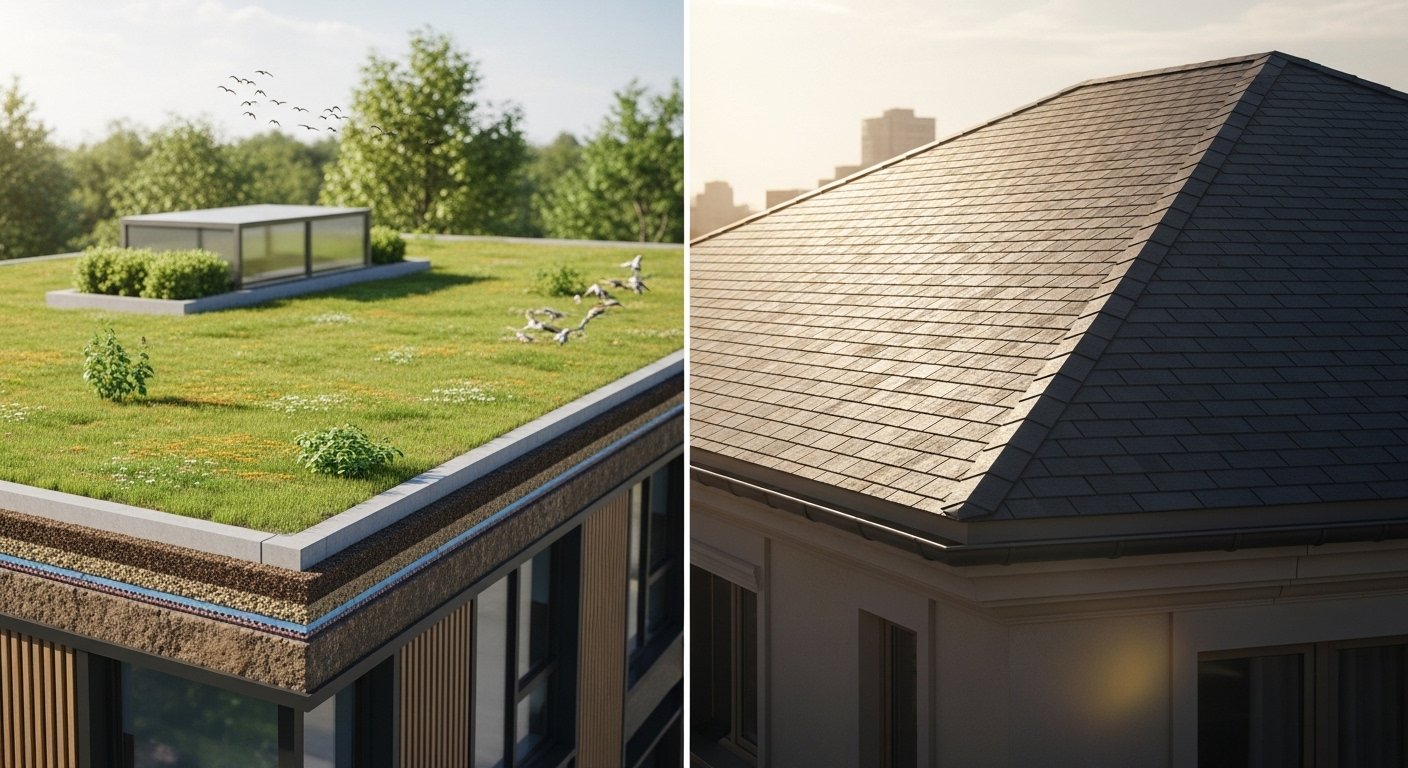
So how does a green roof stack up against what most buildings have now?
A traditional roof is cheaper upfront, simpler to install, and widely understood by any roofing contractor. But it absorbs heat, contributes to stormwater runoff, and typically lasts 20–30 years before needing replacement.
A green roof costs more to install but protects the waterproofing membrane from UV damage and temperature extremes, which actually extends the life of the roof system underneath. It also adds insulation, reduces runoff, and improves the building’s environmental footprint.
What about green roof vs cool roof? Cool roofs use reflective materials to bounce sunlight away. They’re effective at reducing heat gain, but they don’t manage stormwater, support biodiversity, or offer insulation the same way green roofs do.
Green roof vs solar panels is another common comparison. They’re not actually competitors many buildings combine both. Solar panels generate energy, green roofs manage water and heat. In fact, the cooler microclimate a green roof creates can improve solar panel efficiency.
Green roof pros and cons in summary: higher upfront cost, more complex installation, and structural requirements are the main drawbacks. The benefits energy savings, longevity, air quality, stormwater management are significant. Are green roofs worth it? For most urban buildings with the right structural capacity, the answer over a 20–30 year horizon is yes.
Green Roofs in Urban Areas
Green roofs in cities aren’t a new idea they’ve just become a smarter, more engineered one.
Germany is the world leader. Cities like Stuttgart and Berlin have been installing green roofs since the 1960s, and today roughly 10% of German rooftops are green. It’s practically standard practice there.
The UK has seen significant growth in green roof adoption, particularly in London, where sustainability policies and flooding concerns have pushed the industry forward.
Canada, especially cities like Toronto, has been proactive too. Toronto actually mandated green roofs on certain new commercial buildings back in 2009 one of the first cities in North America to do so.
In the USA, cities like Chicago, New York, and Portland have strong green roof incentive programs. Chicago’s City Hall green roof is one of the most well-known examples in the country.
Many of these projects are tied to LEED certification a globally recognized standard for sustainable building design. A green roof can contribute meaningful points toward LEED status, making it attractive for developers pursuing sustainable building credentials.
Green roof regulations vary by city and country, but the trend is clearly moving toward incentivizing or even requiring green infrastructure in urban architecture.
Green Roof Installation Process
Installing a green roof isn’t a weekend DIY project. It requires professional assessment, careful planning, and skilled execution.
Here’s a high-level overview of how the green roof installation process works:
Step 1: Structural assessment. Before anything else, an engineer or qualified contractor needs to confirm that your building’s structure can handle the added weight. This is non-negotiable.
Step 2: Waterproofing. The existing roof is inspected, repaired if needed, and a high-quality waterproofing membrane is applied or confirmed to be in good condition.
Step 3: Installing the system layers. Root barrier, drainage layer, filter layer, and growing medium are installed in sequence. Each layer has to be done right or the whole system suffers.
Step 4: Planting. Vegetation is installed either as pre-grown sedum mats, plugs, or seeds depending on the system type.
Step 5: Irrigation setup (if needed). Extensive roofs often don’t need irrigation once established. Intensive systems usually do.
Step 6: Ongoing maintenance plan. A good contractor will walk you through what the roof needs season by season.
Finding the right green roof builders and contractors matters enormously. You want someone who specializes in eco roofing systems, understands local climate and drainage requirements, and can coordinate with structural engineers. If you’re considering sustainable roofing in dense city environments, professional services like Manhattan Roofing can help evaluate structural capacity and waterproofing needs before you commit to a system.
FAQs
What is a green roof and how does it work?
A green roof is a roofing system covered with vegetation and a growing medium. It works by absorbing rainwater, reducing heat transfer, and providing insulation. The layers underneath waterproofing membrane, drainage, and root barrier protect the building while supporting plant life above.
Can you walk on a green roof?
It depends on the type. Extensive green roofs aren’t designed for foot traffic they’re low-maintenance plant systems. Intensive green roofs are built to be walkable and can function as full rooftop gardens with paths and seating areas.
Are green roofs waterproof?
Yes. A properly installed green roof includes a high-quality waterproofing membrane as a foundational layer. In fact, the vegetation and growing medium actually protect that membrane from UV rays and temperature damage, helping it last longer than on a conventional roof.
Do green roofs reduce energy bills?
Yes, they do. The insulation effect of the extra layers reduces heat gain in summer and heat loss in winter. Building owners typically see noticeable reductions in heating and cooling costs, with energy savings ranging from 15% to 30% in many cases.
Do green roofs prevent flooding?
They help significantly. Green roofs can absorb 50–90% of rainwater depending on the system depth and design, releasing it slowly rather than sending it straight into storm drains. This reduces pressure on urban drainage infrastructure during hea
Is a green roof expensive?
Upfront, yes more so than a conventional roof. But when you factor in the extended lifespan (40–60 years), energy savings, reduced stormwater fees, and lower maintenance on the membrane underneath, the long-term value is strong.
How long does a green roof last?
A well-maintained green roof system can last 40 to 60 years. That’s significantly longer than most traditional roofing materials, largely because the vegetation protects the waterproofing layer from the elements.